

two-state solution : ค้นหาหนังสือธรรมะ หน้า 61 / 67
หน้าหนังสือทั้งหมด
23
Understanding the Path to Nirvana: The Buddha's Teachings
the attainment of Nirvana. In the Dhammacakkapavattana Sutta, further to the clarification of the profitable path of practice, the Buddha stipulates paths of practice that are unprofitable and might e
This text discusses the Buddha's elucidation of the paths to Nirvana as presented in the Dhammacakkapavattana Sutta. It highlights the unprofitable practices, particularly the path of sensual indulgen
39
Understanding Self-Mortification in Buddhism
It is for this reason that the Lord Buddha should want to start his sermon by instructing the ‘group of five’ that indulgence of the senses is unsuitable, base, ignoble, without benefit, unsuitable fo
In this text, Lord Buddha teaches that indulgence of the senses is unsuitable for a Buddhist monk and should be avoided. The practice of self-mortification, common among non-Buddhist ascetics, include
43
Understanding the Noble Eightfold Path
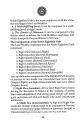
Noble Eightfold Path is the most auspicious of all the virtuous teachings of the Lord Buddha.
4. A Wish-fulfilling Jewel: It can be compared to a wish-fulfilling jewel of eight facets.
5. The Chariot
The Noble Eightfold Path is central to Buddha's teachings, likened to a wish-fulfilling jewel. It consists of eight components: Right View, Right Intention, Right Speech, Right Action, Right Livelihoo
44
Understanding Right Intention and Right Speech in Buddhist Practice
subtle defilements¹ [anusaya].
2.1 Right Intention (mundane): At low level Right Inten- tion means having the wholesome intention to be generous, keep the Five Precepts, renounce the world to become a
This text discusses key aspects of Buddhist practice, specifically focusing on Right Intention and Right Speech. Right Intention involves having wholesome intentions such as generosity and the desire
54
Understanding the Origin of Suffering in Buddhism
2.2 The Origin of Suffering as a Cause
In explaining the Origin of Suffering, the Buddha intended to make clear that the suffering experienced by living beings has craving as its cause. As soon as the
In this examination of the Buddha's teachings, the Origin of Suffering is explained as being rooted in craving, which leads to a cycle of suffering. The relationship between the Origin of Suffering an
75
Understanding Suffering and Attachment
move those hateful things or escape from their grasp — but when we can’t it only adds to the suffering in our mind.
11. Separation from loved ones and treasured things [piyihi vipayoga dukkhā] If we a
This text delves into the various forms of suffering as described in Buddhist teachings. It highlights how separation from loved ones and possessions leads to emotional pain and how disappointment man
107
परम ध्यान और आत्मा का केंद्र
(sleeps).
Luang Phaw Wat Paknam explained that the ability to bring our mind to a standstill at this centre of the body is what we call ‘majjhima’ or ‘centering’. When the mind comes to a standstill
लुआंग फॉ वट पाकनम ने समझाया कि शरीर के केंद्र पर ध्यान लाने की क्षमता को 'मध्यम' कहा जाता है। यह वह बिंदु है जहाँ मन सद्भाव में आता है, और इसे अच्छे या बुरे के संदर्भ में नहीं रखा जा सकता है। इसके द्व
111
Understanding the Dhammakāya in Insight Meditation
called the ‘Coarse Dhammakāya Arahant’ or the ‘Subtle Dhammakāya Arahant’ — the latter two being the bodies of enlightenment of the arahant. The Dhammakāyas are all transcendental [lokuttara] in natur
This text delves into the concept of Dhammakāya Arahant, distinguishing between the Coarse and Subtle Dhammakāya. It explains that these bodies are transcendental and consist of pure aggregates that a
131
Mindfulness and Right Concentration in Buddhism
7.4 Mindfulness of the *dhammas* in the *dhammas*
Mindfulness of the *dhammas* in the *dhammas* is to see and consider the mental phenomena both inside and outside, the whole of the time. Seeing the
Dieser Abschnitt behandelt die Achtsamkeit gegenüber Dhammas und die richtige Konzentration im Buddhismus. Die Achtsamkeit richtete sich sowohl auf innere als auch äußere mentale Phänomene, die erford
150
The Power of Right View
so bhagavā" and "Namo buddhassa" before throwing the dice. By contrast, the boy from the family of False View would recollect the virtue of various heretics before throwing the dice with the words "Na
In this narrative, the contrast between Right View and False View highlights that those who hold Right View, symbolized by the boy from the family of Right View, always prevail. Through various incide
151
The Tale of the Ogres and the Boy
ogre said to the other that they ought to eat the boy up,
but the other ogre forbade him. The False View ogre ig-
nored the warning and grabbed the boy’s feet, waking
him. The boy was startled and exc
In this tale, two ogres discuss eating a boy but are interrupted when the boy wakes. The True View ogre insists they help him instead. They transform into the boy's parents to bring him food and leave
174
Understanding Right Effort and Mindfulness in Buddhism
Hearing the Lord Buddha’s explanation, the Brahmin attained "Stream-Entry".
This is an example of making effort representative of the third category of Right Effort on the worldly level arising from
ในบทเรียนนี้ เราจะทำความเข้าใจเกี่ยวกับ ความพยายามที่ถูกต้อง ร่วมทั้งการพัฒนาจิตสำนึกที่ถูกต้องในพระพุทธศาสนา โดยนำเสนอการรักษาคุณธรรมที่สงบ และการเจริญสติใน 4 ประการ เช่น การตั้งอยู่ในกาย อารมณ์ จิต
186
The Jewelled Wheel of the Universal Monarch
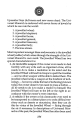
UPOSATHA DAYS (full-moon and new moon days). The Universal Monarch is endowed with seven forms of jewels by which he can rule the world:
1. A jewelled wheel;
2. A jewelled elephant;
3. A jewelled hors
This text discusses the essential attributes of the Jewelled Wheel bestowed upon the Universal Monarch. Among seven jewels, the Jewelled Wheel stands out for its double function as an invincible weapo
190
Bahiya and Konḍañña: Paths to Enlightenment
With those words alone, Bahiya was able to become an arahat. However, there are those, both in Thailand and abroad who look at examples such as that of Bahiya and come to the conclusion that you don't
This text delves into the spiritual journeys of Bahiya and Konḍañña, highlighting how Bahiya attained arahatship with minimal guidance, raising questions about the necessity of meditation for enlighte
194
Choosing the Right Disciples in Buddhism
so many lifetimes in his past of pursuing Perfections, still
had to waste six years in the discovery of the Dhamma, stak-
ing his own life for the knowledge — how much harder
would it be for others to
Through his past lifetimes and pursuit of Perfection, the Buddha dedicated six years to discover the Dhamma. Acknowledging the difficulty others may have in understanding, he chose his first disciples
197
The Middle Way: Buddha's Revolutionary Teaching
tered to liberate themselves from suffering, but because the strongest spiritual trend of the time was the practice of self-mortification, many went astray or perished in their quest. Having tormented
This text discusses the historical context of the Buddha's teachings, emphasizing how many were misled by the practice of self-mortification in their quest for liberation from suffering. It highlights
223
Exploring Dhammakāya and the Eightfold Path
Dhammakāya, Sotāpana: Effort, Right (see Right Effort)
Coarse, 108, 134; defilements of
Eightfold Path: arises internally as 136-7; Subtle, 108, 134
sphere 105; components 20, 117,
Dhammakāya Traditi
This text delves into the Dhammakāya tradition, highlighting key components of the Eightfold Path and its teachings on defilements, enlightenment, and the nature of suffering. Concepts are illustrated
231
Exploring Self-Mortification and Sensual Indulgence
self-mortification 19, 27, 35-7, 103, causes lamentation 32; causes one
105, 194-5: dominates contemporainary spiritual thought 194-5; examples of practice 35; fruitless 19; {metaphors, grasshopper le
This text discusses the concepts of self-mortification and sensual indulgence. It elaborates on the causes and consequences of self-mortification, which often leads to lamentation and spiritual harm.
254
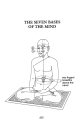
THE SEVEN BASES
OF THE MIND
two fingers' breadths above the navel
255
13
Untitled
into the hell from whence they came.
Some emerged from darkness into the light. They
used their human life as a turning point for their unskil-
ful past, doing only good deeds, making only progress
be
No content provided for summary.